
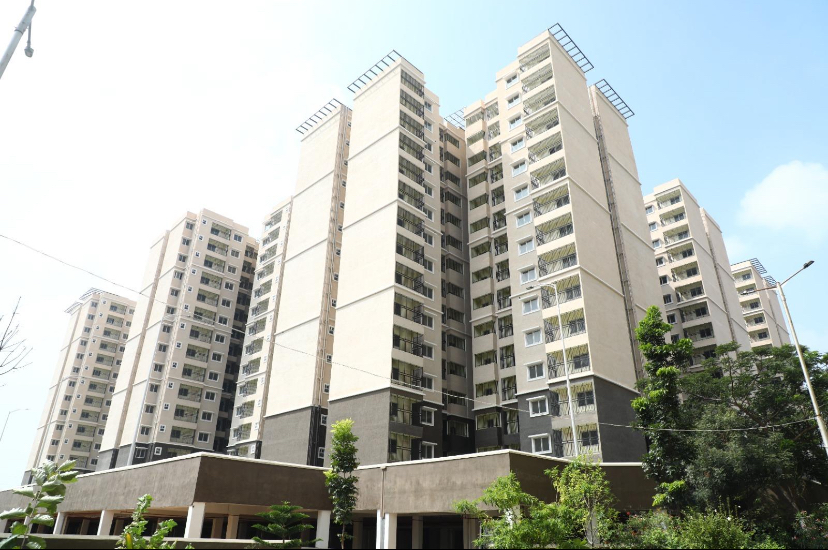
The Bangalore Development Authority (BDA) is set to introduce a new maintenance policy for its apartment projects, aimed at standardising maintenance charges and defining developer responsibilities. The policy is expected to serve as an interim framework until a formal apartment regulation is notified.
BDA is preparing to roll out a structured maintenance policy for its apartment developments starting next month. The policy will primarily apply to upcoming projects, while efforts are also being considered to extend similar guidelines to existing apartment complexes.
🏗️ Need for a Structured Maintenance Framework
At present, BDA manages essential services in its apartment complexes, including:
• Lift operations
• Security services
• Garbage disposal
• Maintenance of common areas
However, officials have indicated that a comprehensive and formal policy governing maintenance management and funding has been lacking.
The proposed policy seeks to address this gap by introducing a clear and standardised framework.
📄 Key Features of the Proposed Policy
The new policy is expected to:
• Define the developer’s responsibility period, likely ranging from one to two years
• Establish a structured transition mechanism for transferring maintenance responsibilities to Resident Welfare Associations (RWAs)
• Standardise the calculation and collection of maintenance charges
Currently, BDA collects approximately 1% of the flat cost for maintenance in newer projects. The authority is evaluating alternative models, including:
• Per-square-foot charges
• Uniform per-unit maintenance fees
• Hybrid models combining fixed and variable components
⚖️ Legal and Regulatory Context
The policy is being introduced amid ongoing legal ambiguity regarding apartment association registrations. The Karnataka High Court has indicated that associations should be formed under the Cooperative Societies Act. However, the absence of a formal government notification has delayed the process.
As a result:
• Formation of RWAs remains inconsistent
• Transfer of common areas is currently constrained
• Many apartment complexes continue to operate in a transitional phase
The proposed policy is intended to act as an interim solution until a formal Apartment Act is notified.
🏢 Stakeholder Feedback and Industry Response
Initial responses from residents and stakeholders have been generally positive, although there is a demand for greater clarity and implementation details.
Residents have highlighted challenges such as:
• Difficulty in collecting maintenance charges without formal associations
• Lack of enforcement mechanisms for payment compliance
• Delays in completion of pending infrastructure within apartment complexes
Stakeholder groups have also emphasised the need for:
• Clearly defined standard operating procedures (SOPs)
• Transparent fund management systems
• Well-defined service scope and maintenance responsibilities
• Structured transition mechanisms for handing over control to RWAs
Comparisons have been drawn with established frameworks adopted by authorities such as the Delhi Development Authority, which may serve as reference models.
📊 Conclusion
The introduction of a formal maintenance policy by BDA represents a significant step towards improving governance and operational clarity in its apartment projects. By standardising maintenance practices and defining responsibilities, the policy aims to address existing gaps in management and funding.
As Bengaluru continues to expand with large-scale residential developments, structured maintenance frameworks are expected to play a critical role in ensuring long-term sustainability and efficient community management.
⚠️ Disclaimer
This article is intended for general informational purposes only and is based on publicly available information and statements from relevant authorities. The content does not constitute legal or investment advice.
Policy details, timelines, and implementation frameworks are subject to change based on regulatory decisions. Readers are advised to verify information through official sources and consult professionals where necessary.